




For cross-border e-commerce sellers, the second half of the year is more than just a season—it’s a high-stakes "sprint" that defines annual profitability. With major shopping events like Black Friday, Cyber Monday, and the Christmas season approaching, product selection becomes the ultimate "make or break" factor.
Many sellers find themselves at a crossroads: fearing the risks of untested niches while dreading the low margins of hyper-competitive, homogenized products. The smartest move? Focus on "evergreen" categories with a proven track record. Loungewear, for instance, has consistently delivered stellar results, with top-performing styles reaching over 8,000 orders in a single month. Driven by stable demand and seasonal heat, loungewear remains a "gold mine" category for the upcoming Q4 peak.
The "Homebody Economy": Driving the Q4 Surge The primary catalyst for the loungewear boom is the "winter hibernation" in overseas markets. As temperatures drop across Europe and North America, consumers spend significantly more time indoors, leading to a surge in demand for comfortable, functional, and stylish home attire. Historical data shows that loungewear sales begin to climb in September, accelerate during the Black Friday/Cyber Monday period, and peak around Christmas. In fact, peak season sales often account for over 40% of the entire year's revenue.
Among various styles, the button-down cardigan set stands out as the ultimate bestseller. Whether it’s long-sleeved versions for the crisp October-December air or short-sleeved variants for warmer indoor environments, these versatile pieces are a staple in international wardrobes.
PART 01: 2 Differentiation Strategies for Premium Pricing
Selling basic loungewear is a race to the bottom on price. To command a premium and attract high-value customers, consider these two strategic pivots:
-
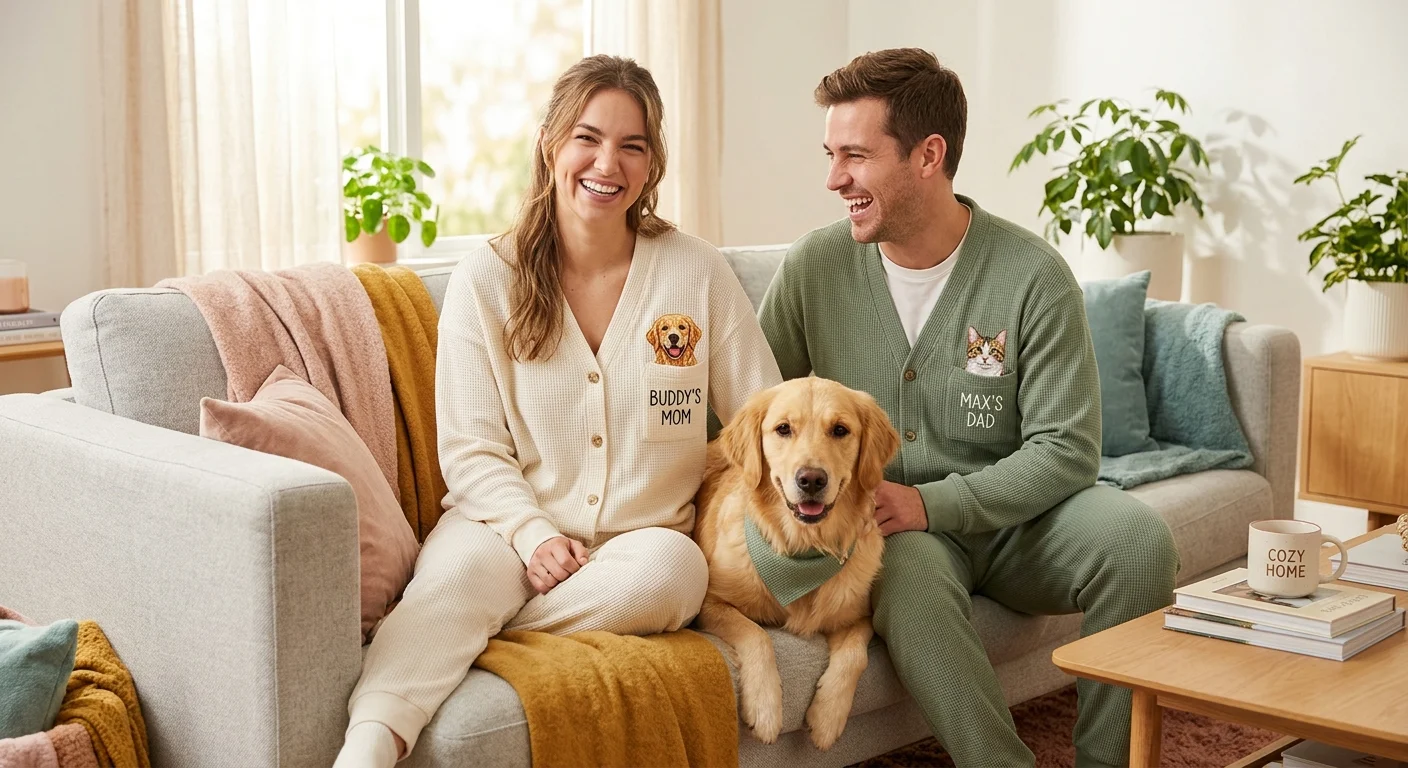
The "Lifestyle Ritual": Couple and Family Matching Sets
Modern international consumers are increasingly prioritizing the "sense of ritual" in their domestic lives. Demand for matching sets—whether for couples or the entire family—is skyrocketing. These bundles often command a 30% to 50% higher Average Order Value (AOV) than individual items. Consumers are more than willing to pay for that cozy, Instagrammable family moment, and the repeat purchase rate for these sets is significantly higher than for basic styles.
-
The "Emotional Connection": Personalized Portrait & Pet Customization
In many households abroad, pets are cherished family members. Products that feature personalized elements or pet motifs have high acceptance and strong price elasticity. Sellers can offer a "Customization Service" directly on the product page: customers upload photos of themselves, their partners, or their pets, which are then printed or embroidered on the chest, cuff, or pocket. Adding small details like initials or anniversary dates adds an extra layer of exclusivity. Pro Tip: Be transparent about the 7-10 day production lead time to manage customer expectations and avoid disputes.
PART 02: Strategic Inventory Planning for Maximum Profit
Timing is everything. With the peak season starting in September, your logistics must be airtight.
- Standard Styles: Aim to complete your initial stock-up by late August. Factoring in a 2-3 week shipping window ensures your products are live and searchable by early September.
- Customized Items: Due to the longer production cycle, you should coordinate with manufacturers 1-2 months in advance. Aim to have your first batch ready by mid-September to avoid "out-of-stock" scenarios during the height of the shopping frenzy.
- Safety Stock: Based on historical data, we recommend over-stocking by 20%-30% for potential "hero" products. In the peak season, the cost of lost sales due to stockouts far outweighs the cost of holding a little extra inventory.