




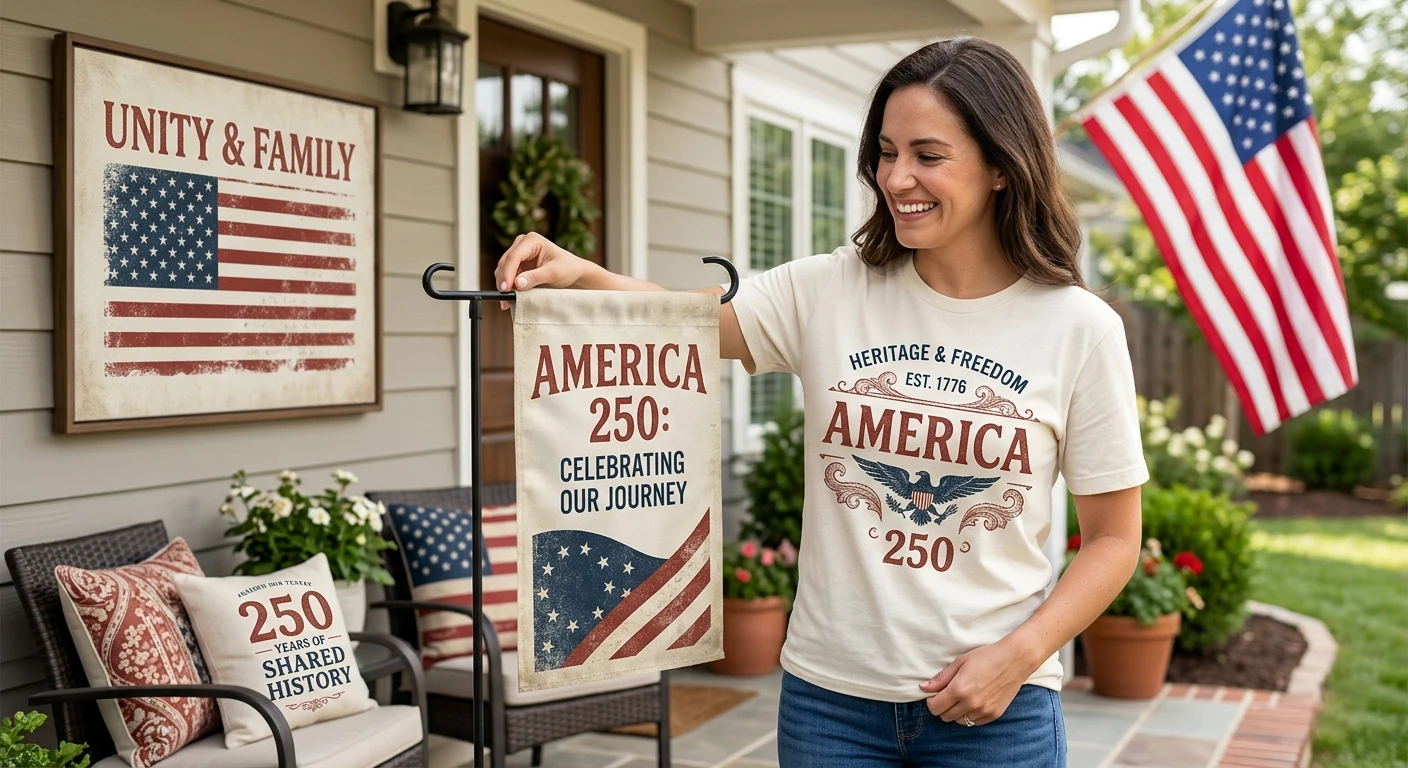
In 2026, the United States will celebrate its 250th anniversary. This goes beyond a single day of celebration; it marks a monumental milestone in American history. For Print-on-Demand (POD) sellers, this presents an unparalleled, once-in-a-generation opportunity.
Why? Because American consumers' mindsets are shifting. This isn't just about fleeting purchases; it's a commemorative celebration. If your strategy relies solely on quick social media trends or low-cost gimmicks, success during America 250 will be elusive. The long-term opportunities of this historic moment belong to sellers who prioritize consumer psychology and strong design aesthetics.
Let's break down exactly how to prepare for this historic wave.
Balancing Situational Needs with Commemorative Value: Consumers are searching with clear intents, balancing functional requirements with sentimental value.
- Situational Needs: Demand for specific attire tailored for parades and local community events.
- Home Decor: Decorative flags and wall art for yards and living spaces, fulfilling a strong desire to display civic pride.
- Commemorative Items: Gifts suitable for family legacies, where sentimental and commemorative value significantly outweighs practical utility.
- Typography: Drawing heavily on 18th-century printing aesthetics. Utilize classic serif fonts or elegant script styles inspired by the Declaration of Independence to evoke a profound sense of historical authenticity.
- Color Palette: Steer clear of high-saturation fluorescent tones. Embrace a palette of low-saturation, classic hues like Brick Red, Deep Navy, and Off-white, designed to evoke solemnity and nostalgia.
- Texture and Detail: Incorporate visual elements reminiscent of aged parchment, historic seals, and wax impressions to elevate the products to a "collectible" quality and feel.
- Key Themes: Freedom, Heritage, Unity, Family.
- Tone: Sincere, inclusive, and positive. A crucial rule: Avoid political divisiveness! Inclusive, non-partisan patriotic designs have the broadest appeal.
- Avoid Excessive Symbol Piling: Refrain from simply repeating patterns of flags and symbols. Remember that intentional negative space is a hallmark of sophisticated design.
- Prohibit Divisive and Extreme Messages: Any elements that are aggressive, satirical, or carry heavy political bias should be avoided. Such designs carry significant risks, including negative customer reception and potential account issues.