




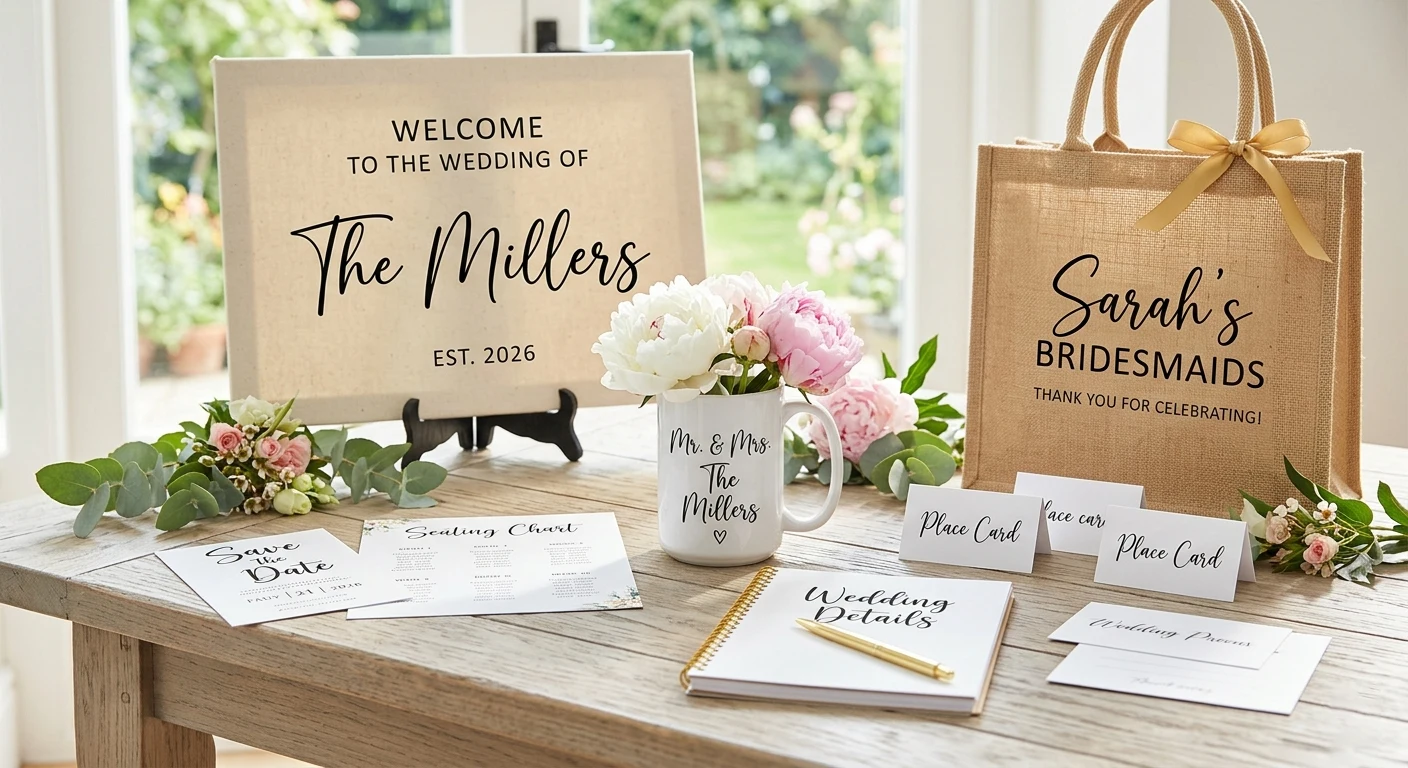
From May to October, a highly profitable niche quietly dominates the market: The Wedding Season POD (Print-on-Demand) Sector.
In the U.S., couples rarely hesitate when it comes to wedding spending. Recent industry data from major wedding planning platforms indicates that the average cost of a wedding has reached $34,200, with an average of 117 guests. Breaking down the budget, floral and decor account for roughly 9% of total expenses, while stationery and paper goods take up about 1%. These small percentages translate into hundreds, if not thousands, of dollars per wedding.
The global POD wedding market—encompassing photo albums, custom mugs, frames, and invitations—is valued at $13.05 billion in 2025 and is projected to soar to $22.38 billion by 2034. This doesn't even include "soft" merchandise like custom T-shirts and tote bags, which represent an even larger slice of the pie.
The best part? Wedding products are rarely a one-time transaction. A single wedding can drive demand across invitations, decor, bridesmaids' gifts, honeymoon apparel, and post-wedding keepsakes, leading to multiple repeat orders within one customer journey.
Here is a breakdown of the Top 8 Wedding POD Design Trends to help you dominate the 2026 season.
01 The Names of the Couple (The "King of Customization")
The most classic and foolproof choice. Printing the couple's names creates an exclusive feel comparable to engraving wedding rings.
- Best Sellers: Canvas welcome posters, where print quality and durability are key.
- Volume Drivers: Tote bags and mugs. These are often purchased in bulk as favors for dozens of guests.
02 Cartoon Avatars (High-Profit Graphics)
This is a lucrative segment for artists. Custom portraits—where the couple (and perhaps their pets) are turned into cute illustrations — are huge for sentimentality.
- Mainstays: Large wall art and decorative paintings.
- Add-ons: Fridge magnets, acrylic stands, and custom T-shirts serve as high-conversion entry products.
03 Intertwined Hearts (The Versatile Classic)
The heart symbol represents a universal connection. It's clean, recognizable, and fits perfectly on small items without looking cluttered.
- Stable Earners: Greeting cards, couple mug sets, coasters, and pillowcases.
- Bulk Buys: Small makeup bags and favor boxes with heart motifs are seasonal favorites.
04 Dates & Timelines (The "Required" Keepsake)
The wedding date is one of life's most unforgettable milestones. Printing the specific date—or a timeline of the relationship—maximizes emotional value.
- Core Product: Commemorative wall art. Couples love hanging these in their new homes.
- Bundles: Custom calendars (starting from the wedding month) and wooden desk plaques can double your average order value.
05 "Mr. & Mrs." / "Groom & Bride" (Atmosphere Creators)
These titles radiate the joy and pride of being newlyweds. They are essential for both the event and post-wedding life.
- Social Staples: Matching T-shirts for honeymoons and social media photos.
- Event Decor: Banners and hanging flags for the reception.
06 Animal Couples (The Low-Competition "Blue Ocean")
Hedgehogs, penguins, or swans—animal pairs carry a "meant to be" vibe. While the volume is smaller than name customization, the competition is 30%–50% lower.
- Entry Points: Couple hoodies, phone cases, and greeting cards.
07 Suits & Gowns (Strong Wedding Identity)
The visual shorthand for a wedding. This minimalist approach is elegant and instantly communicates the theme.
- Timing: Focus on invitations and welcome signage 1–2 months before the wedding.
- Aftercare: Mini desk ornaments and mugs serve as perfect "memory" products after the big day.
08 The Engagement Ring (The Romantic Icon)
The diamond ring is the ultimate symbol of a vow. This motif works exceptionally well on "high-end" small goods.
- Steady Sellers: Table cards, seating charts, and thank-you cards.
- Premium Tip: Adding gold foil or embossed textures can increase the perceived value and price by 30%–50%.
Summary for Sellers
The wedding season isn't just about one day; it's a months-long cycle of celebration. By focusing on these eight trends, you can capture the "ceremony-driven" consumption that defines the U.S. market.