




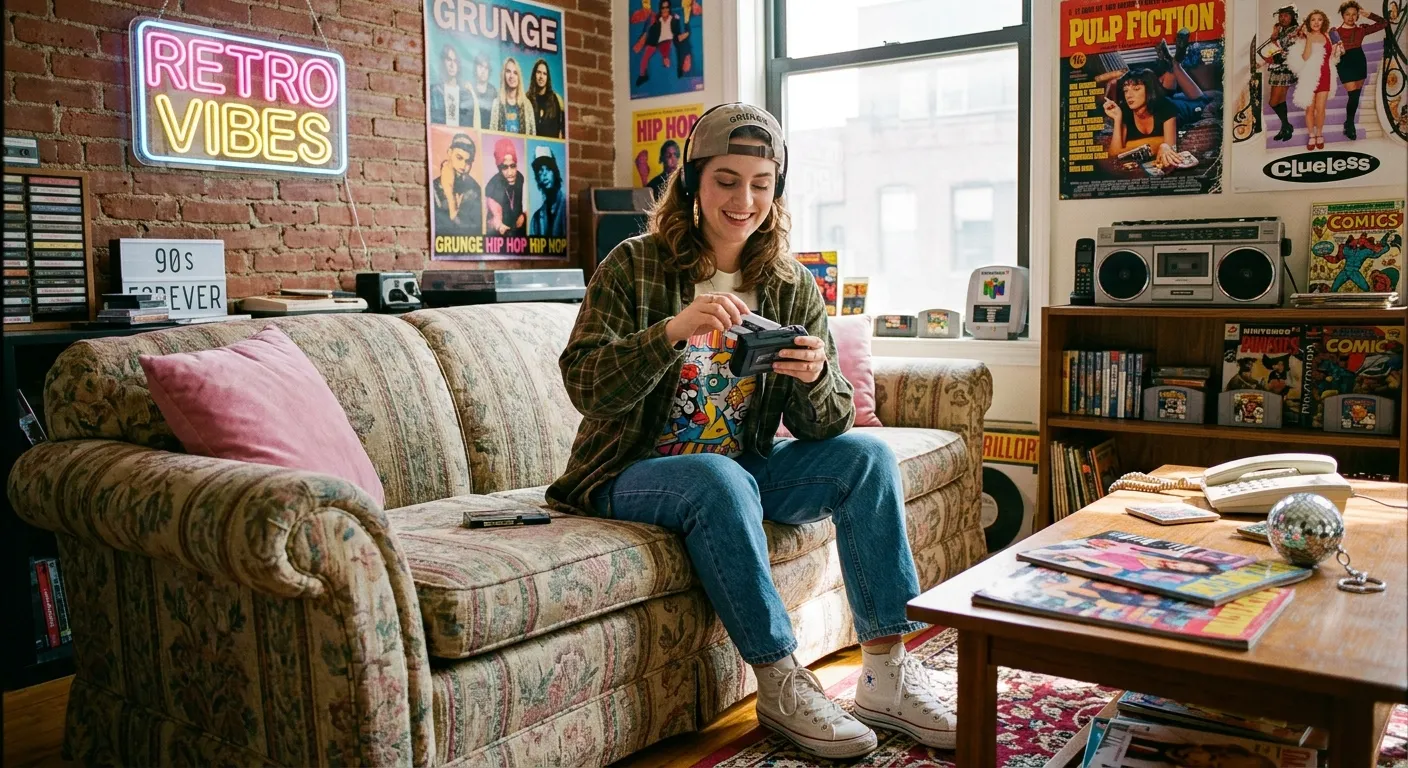
The 1990s was a decade defined by diversity and bold experimentation in both music and fashion. The era saw the rise of two dominant genres, hip hop and grunge, which not only shaped the sound of the decade but also had a profound impact on its visual aesthetic. Hip hop championed vibrant colors, baggy silhouettes, and street culture, while grunge offered a more introspective, raw, and unpolished look. These stylistic elements continue to remain relevant and have seen a significant resurgence as part of the ongoing 90s nostalgia.
For sellers, the revival of 90s aesthetics presents a lucrative opportunity to create designs that appeal to a wide range of consumers. This audience includes both those who lived through the era and a new generation discovering and appreciating these iconic styles for the first time.
01 Bold Colors & Patterns
The 90s was famous for its fearless use of color. From the bright, solid color-blocking in hip hop fashion to the grunge-inspired plaid patterns and muted tones, color was crucial in defining the decade's visual identity. Sellers can integrate these elements into their designs by using vibrant, contrasting colors, geometric shapes, and eye-catching graphics to evoke that characteristic 90s energy.
02 Retro Fonts
The fonts and typography of the 90s are instantly recognizable. From the neon, futuristic typefaces associated with science fiction and arcade culture to the raw, distressed letters linked with alternative music, 90s typography adds a sense of authenticity to any design. Using retro-inspired fonts can make your products stand out and immediately connect with customers who hold a fondness for this era.
03 Pop Culture References
The 90s were marked by cultural milestones, producing films, television shows, and video games that have since become classics. Incorporating references to 90s popular media into your designs—whether as direct images or subtle nods—can forge strong emotional connections with your audience. Consider integrating elements from beloved video games, iconic sitcoms, or even the memorable commercial logos that defined the time.
04 Grunge Aesthetic
Grunge, a subculture originating from the Seattle music scene, brought with it a distinct visual style that rejected the polished look of the previous decade. Flannel shirts, ripped jeans, and layered clothing were staples of grunge fashion. These textures and styles can be translated into design elements for apparel and accessories. For instance, using distressed textures, muted color palettes, and layered graphics can help your products capture the essence of grunge.
05 Hip Hop & Streetwear
The 90s also saw hip hop rise as a dominant cultural force, accompanied by a fashion revolution. Oversized clothing, bucket hats, and chunky sneakers became iconic symbols. Sellers can draw inspiration from hip hop's bold aesthetic by incorporating streetwear elements into their designs. This might include using graffiti-style graphics, bold logos, and patterns that reflect the urban culture of the 90s.
END
The revival of 90s design trends offers sellers a unique chance to ride the wave of nostalgia that continues to captivate consumers. By understanding the key elements of 90s visuals and thoughtfully integrating them into your product offerings, you can create products that not only stand out but also resonate deeply with your target audience.