




As we wrap up the final quarter of 2025, the big question on every e-commerce entrepreneur's mind is: "Will Print-on-Demand (POD) still be a goldmine in 2026?"
Making informed decisions now is crucial for building a sustainable business plan for the years ahead. Here is the deep dive into the "money-making potential" of POD in 2026 and how you can transition from a beginner to a high-earning pro.
"Is POD Still Profitable in 2026?"
The short answer: Yes, absolutely. However, the landscape has shifted. While the profit potential remains immense, the competition is fiercer. Success in 2026 isn't just about uploading a design; it’s about the "Four Pillars": high-quality products, high-conversion designs, reliable fulfillment partners, and a razor-sharp marketing strategy.
- Profit Margins: The industry average remains healthy, ranging from 15% to 60%, with most successful sellers settling in the 25% to 50% sweet spot.
- Success Rate: While the market is dynamic, research suggests that approximately 24% of POD businesses continue to thrive and scale after their first three years.
Is the Market Reaching Saturation?
Far from it. The POD market is experiencing a massive tailwind driven by consumer demand for personalization and technological advancements.
According to recent market forecasts, the POD industry is expected to grow at a Compound Annual Growth Rate (CAGR) of 22.7% between 2024 and 2032, reaching a staggering $48.4 billion. This growth is fueled by rising disposable income, global internet penetration, and a cultural shift toward unique, custom-made fashion.
The challenge isn't a lack of customers—it’s differentiation. To win in 2026, you must stand out.
How to Dominate the POD Market in 2026: 6 Strategic Steps
-
Master Market Research
Data is your best friend. Understanding consumer psychology and emerging micro-trends allows you to hit the market with precision.
Identify your "Ideal Customer Profile" (ICP) and their spending habits.
Analyze competitors to find "gap opportunities"—products they are missing or doing poorly.
Stay ahead of the curve by monitoring social media trends and industry reports.
-
Curate a Winning Product Line
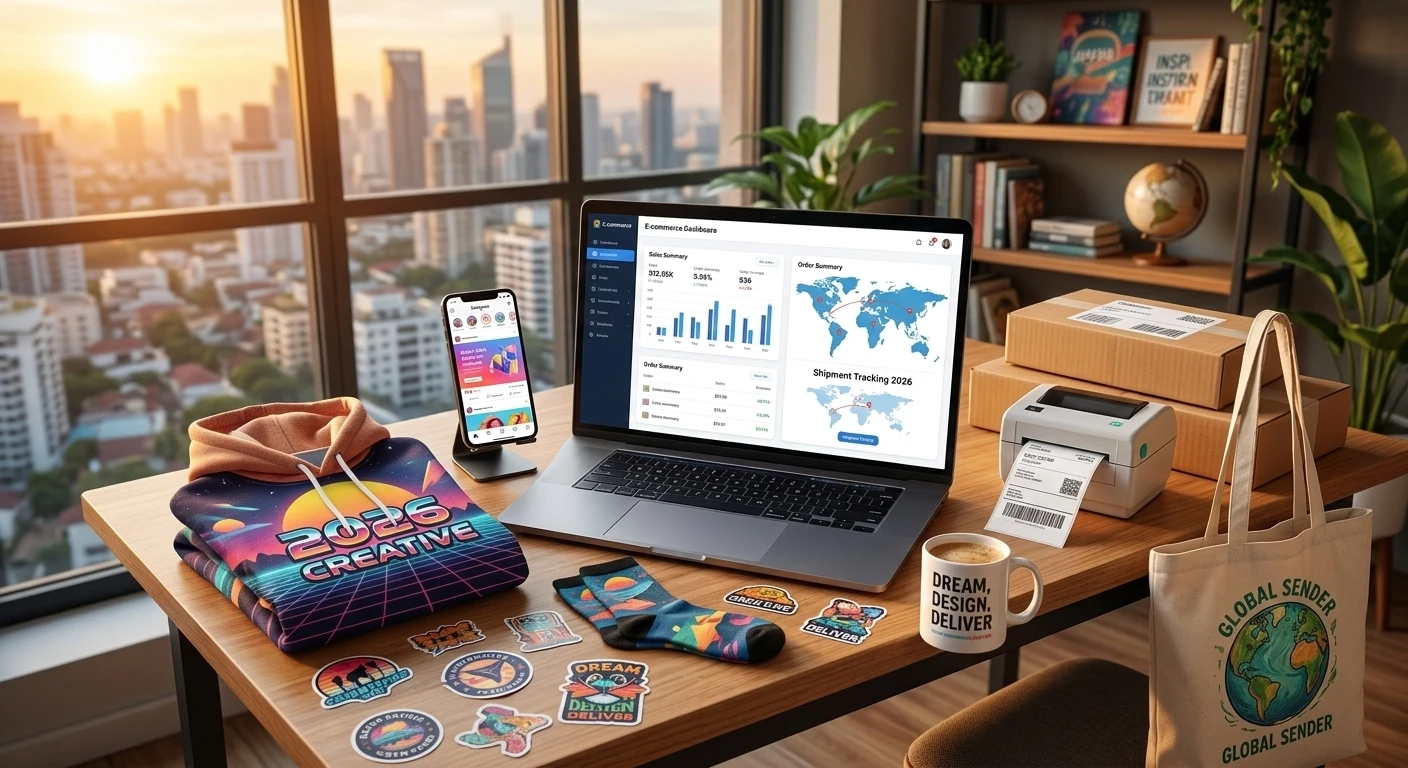
In 2026, you need to think beyond the basic T-shirt. Diversification is key to capturing different customer segments:
- T-Shirts: The evergreen king of POD—high volume, easy to sell.
- Stickers: Perfect "impulse buys" that lower the barrier for a customer's first purchase.
- Hoodies & Outerwear: High-perceived value items that offer better margins, especially during peak seasons.
- Specialty Socks: Novelty items that make for excellent gifts.
- Eco-friendly Tote Bags: Appeals to the growing demographic of sustainable-conscious shoppers.
-
Partner with Top-Tier Suppliers
Your reputation is only as good as your fulfillment. A reliable partner ensures that the product quality matches the mockups and that shipping is prompt. In a world of instant gratification, a 2-day delay can mean the difference between a 5-star review and a refund request.
-
Focus on Unique, High-Conversion Design
Don't just follow trends—set them. Your designs need to resonate emotionally with your niche.
Focus on items with higher perceived value to protect your margins.
Balance "Art" with "Commercial Viability." A design can be beautiful, but it must be wearable or usable.
-
Sell on High-Traffic Platforms
Maximize your visibility by leveraging established ecosystems.
- Marketplaces (Etsy, Amazon, etc.): Great for beginners due to built-in traffic and trust. Around 35% of global shoppers start their journey on these marketplaces.
- Social Commerce: Utilize TikTok Shop or Instagram Shopping to reach customers where they spend their time.
-
Optimize Your Pricing Strategy
Your retail price dictates your survival. When setting prices, consider:
- COGS (Cost of Goods Sold): Include production, shipping, taxes, and platform fees.
- Market Benchmarking: Don't just be the cheapest; be the best value.
- Localization: Consider the buyer's geography to optimize shipping routes and costs.
The Verdict
Print-on-Demand remains a powerful, low-risk business model for 2026. With zero inventory pressure and easy scalability, the "pros" far outweigh the "cons" for those willing to put in the strategic work. By focusing on quality and unique branding, your POD business can thrive in the years to come.