




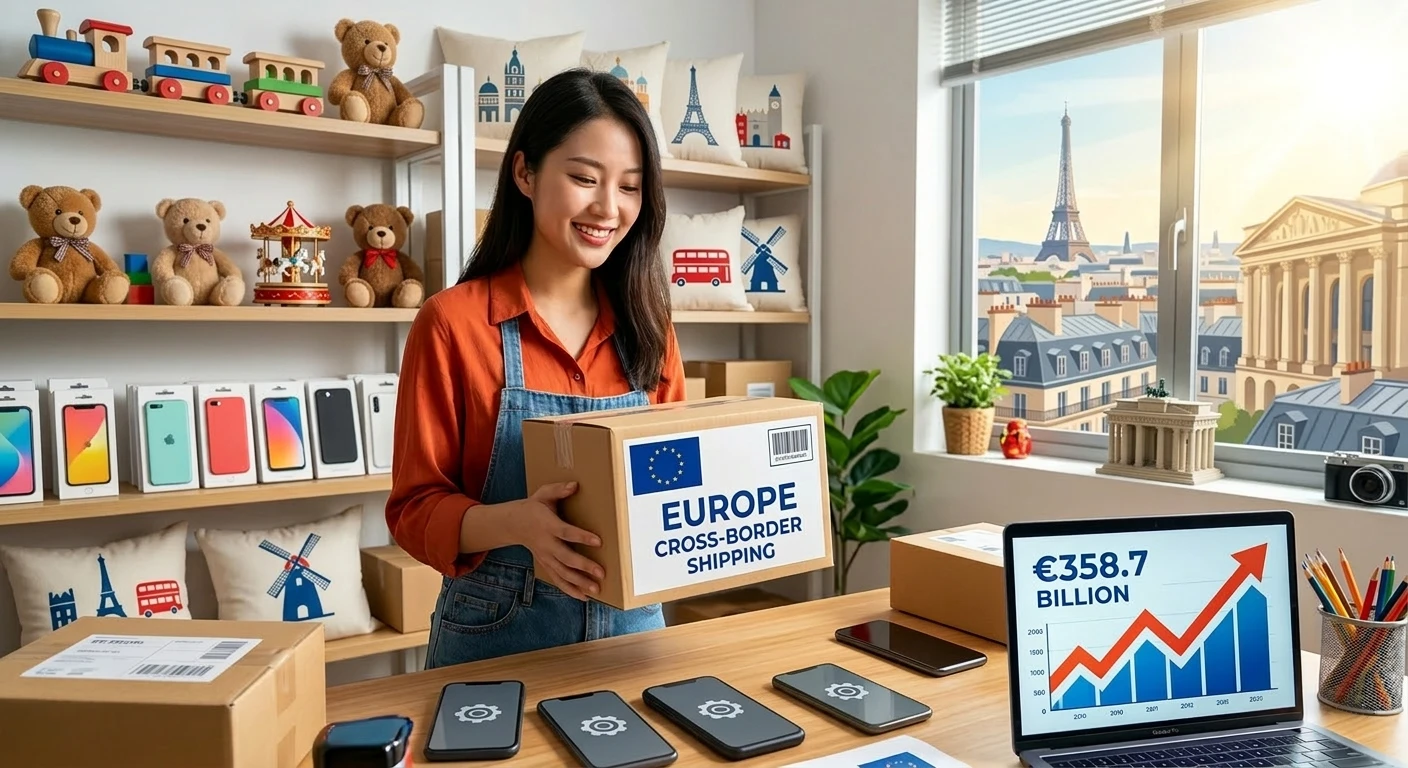
According to the latest industry reports, the European cross-border e-commerce market is projected to exceed a staggering €358.7 billion in total transaction value for the 2024-2025 fiscal year.
For many international sellers, "the market is huge" is a common sentiment—but knowing exactly where to plant your flag is the real challenge. If you find yourself staring at this massive potential without a clear entry point, here is the strategic roadmap you need.
PART 01: Certainty in Growth—Decoding the New Market Signals
The digital landscape is shifting. Online channels now account for 70% (€247.5 billion) of total transactions, meaning sellers can bypass traditional brick-and-mortar competition entirely. With a general growth rate of 9.9% and top-tier marketplaces seeing revenue surges of 10%, there is still significant room in specialized niches despite the dominance of major players.
More importantly, by 2026, 98.2% of visitors in this sector are expected to be cross-border shoppers. This signal is clear: you don’t need a complex local infrastructure to start. Even as a pure cross-border entity, there is a steady and growing audience of international consumers ready to discover your products.
PART 02: Giants vs. Emerging Platforms—Where Should You Invest?
Global marketplace giants continue to hold the lion's share, contributing over 50% of the total transaction volume.
- Established Marketplaces: These platforms offer robust logistics infrastructure and high consumer loyalty. They are the premier choice for categories like Home, Consumer Electronics, and Beauty. Their reach across mature markets (UK, France, Germany, Italy, Spain) and high-growth regions (Netherlands, Sweden, Poland, Belgium) allows for scalable expansion.
- Secondary Marketplaces: With lower entry barriers and a strong focus on circular economy or vintage goods, these are ideal for smaller sellers testing the waters.
- Emerging Disruptors: New social-commerce and algorithm-driven platforms are rapidly climbing the ranks. These platforms excel at reaching specific demographics through targeted recommendations, offering significant traffic support for sellers with strong supply chain advantages.
- Niche Leaders: Specialized platforms for handmade goods, fashion, or sports equipment offer unique opportunities for differentiated competition away from the price wars of general marketplaces.
PART 03: Product Selection—Targeting "Hidden Needs"
Success in Europe isn't just about selling "hot" items; it’s about understanding the European lifestyle and its emphasis on comfort, quality, and health.
- Home & Garden: High-quality furniture (like premium synthetic leather dining chairs) and educational toys (such as magnetic building blocks) are in high demand. Consumers prioritize ergonomic comfort and value for money.
- Personal Care & Health: A "health-first" mindset drives the popularity of skincare for sensitive skin, antibacterial oral care, and herbal-based fragrances.
Beyond products, compliance and logistics are the true foundations. While new VAT tax relief policies for small enterprises in the EU offer potential benefits, they also require sophisticated tax planning, especially for non-EU entities. Furthermore, the advent of "3-day Pan-European delivery" networks has leveled the playing field, making high-speed fulfillment a standard requirement for all players, not just the giants.
PART 04: Strategic Positioning for 2026—Building Your Moat
To thrive long-term, sellers must move beyond the "quick cash" mindset and build sustainable barriers to entry.
- Multi-Platform Diversification: Don't put all your eggs in one basket. Use established giants to stabilize your core business, emerging platforms to test new trends, and niche marketplaces to build brand differentiation.
- Hyper-Local Operations: Approach each market with a tailored strategy. In Germany, emphasize quality certifications and durability. In Spain, where social media influence is high, focus on "Instagram-worthy" visual content and keywords like "eco-friendly" and "exclusive."
The momentum of European cross-border e-commerce is fully engaged. Winning this game isn't just about being first—it's about being the most precise at every touchpoint. By using data as your compass and long-termism as your North Star, you can turn this market into your most profitable venture yet.