




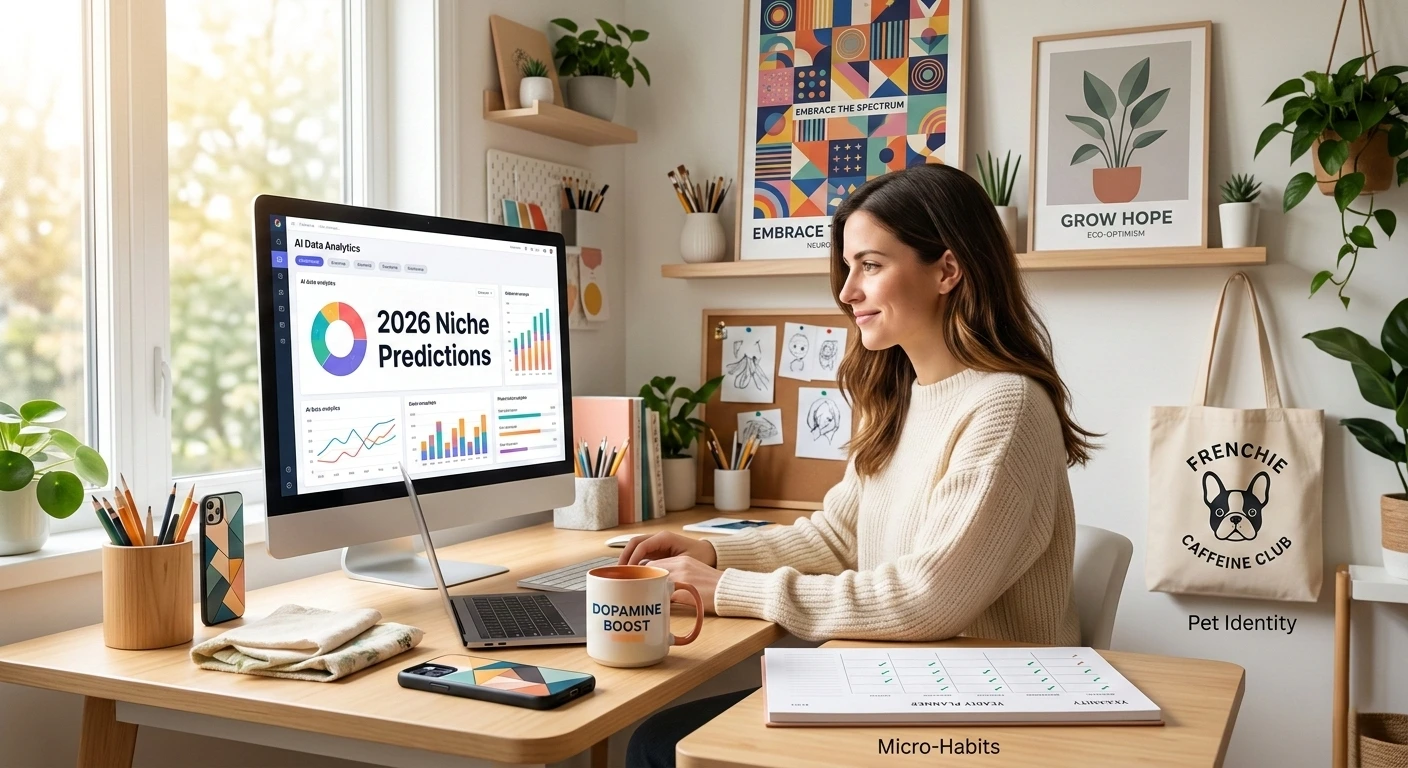
The Print-on-Demand (POD) landscape is shifting. Do you remember the days when one design could sustain your business for six months? Those days are gone. Now, it seems like a design launches, and its traffic drops off a cliff in two weeks. Trends arrive with the force of a hurricane and vanish just as quickly.
POD sellers today face relentless challenges: lightning-fast design obsolescence, high testing costs, and intense competition.
If you’re still relying on gut feelings for product selection—using phrases like "I think this pattern will work" or "I have a feeling this color will be hot"—then it's time for some tough love: in 2026, this approach is almost guaranteed to lose you money.
Today’s article cuts through the noise. We combined AI-driven analysis of massive ecommerce data streams and social media trends to unearth 5 highly promising POD micro-niches predicted to boom in 2026.
These segments boast low competition and remarkably high customer loyalty. We strongly recommend saving this guide for reference.
First, Understanding the "Micro-Niche"
Many beginner sellers simply aim for broad categories like "T-shirts." The reality? Broad categories are overcrowded red oceans.
A micro-niche involves carving out a highly vertical, specific demographic within a larger market.
Instead of generic inspirational posters, think "dopamine decor specifically for the ADHD community." Instead of generic "pet clothing," think "French Bulldog-specific anti-shedding hoodies."
The audience is smaller, but they are incredibly precise:
- High Engagement & Loyalty: These buyers connect deeply with products that represent them, driving repeat purchases.
- Higher Premiums: Because the product is uniquely tailored, buyers are willing to pay more.
- Lower Competition: You bypass the battlefield where giant sellers dominate, allowing smaller, nimble shops to thrive.
How AI Discovers These Blue Oceans
AI tools analyze global data signals to find emerging opportunities:
- Social Buzz: Sudden spikes in specific keywords on social platforms.
- Search Trends: Growing search volume that hasn't yet peaked.
- Cultural Shifts: Changes in values among Gen Z or responses to global events.
- Competition Gaps: Identifying high-demand areas where relevant POD products are currently scarce.
5 AI-Predicted Micro-Niches for 2026
-
Neurodivergent Positivity and Community Support
AI data indicates massive growth in content surrounding ADHD, autism, and the broader concept of neurodiversity. A significant shift is occurring: it's moving from clinical information to themes of self-deprecating humor, emotional healing, and belonging.
There is a growing focus on mental health, and the emotional resonance of "I am not alone" is incredibly powerful.
The Target Audience:
- The neurodivergent community (adults and teens).
- Special education teachers and supportive parents.
- Mental health advocates.
Design Inspiration:
- Dopamine Coloring: High-saturation, visually stimulating designs.
- Gentle Reminders: Relatable quotes about self-care and productivity.
- Sensory-Friendly Fonts: Clear, comfortable typography that reduces cognitive load.
Recommended Products: Stickers, Mugs, T-shirts, Wall Art Posters.
Market Saturation: Low-Medium. Many current designs are still clinical or dated. This is your chance to introduce modern, aesthetic designs that resonate with a younger audience.
-
Ultra-Specific Pet Breed Identity
Today's pet parents don't just "own" a pet; they view their pet as an extension of their own personal identity.
They aren't just generic "dog lovers." They identify as a specific personality type: "a French Bulldog mom who loves strong coffee and has a sarcastic attitude." This highly segmented pet humor is driving extremely high engagement rates on short-form video platforms.
The Target Audience:
- Millennial and Gen Z pet owners.
- Enthusiasts dedicated to specific breeds (e.g., Shiba Inu, Dachshund, specific cat breeds).
Design Inspiration:
- Breed-Specific Humor: Focus on the unique quirks and behavioral "flaws" of the breed.
- Lifestyle Combinations: Mixing the breed identity with other hobbies or habits (e.g., hiking, coffee culture).
Recommended Products: Apparel, Tote Bags, Pet Collars, Pet Beds/Mats.
Market Saturation: Medium. Broad pet products are saturated, but precision targeting (Breed + Personality + Scenario) is still wide open.
-
AI-Inspired "Humanized" Minimalism
Initial excitement over raw AI-generated art is giving way to fatigue. The 2026 trend focuses on designs that are generated by AI but curated and refined by humans to achieve a high-end, sophisticated minimalist aesthetic.
This style is surging in home decor and fashion, emphasizing symmetry, geometric structures, and neutral or muted tones.
The Target Audience:
- Graphic designers and tech professionals.
- Consumers preferring modern, clean home interior design.
Design Inspiration:
- Generative Symmetry: Structured yet intricately detailed patterns.
- Futuristic Botanicals: Abstract art blending nature and technology.
- Soft Tech Color Palettes: Silver gray, creamy white, pale blue.
Recommended Products: Posters, Wall Art, Hoodies, Phone Cases.
Market Saturation: Low. Most sellers are still using AI for generic visuals; you can use it to build a premium, design-driven aesthetic.
-
"Micro-Habit" Wellness for Busy Professionals
Gen Z and Millennials are overwhelmed and exhausted. For many, grand gestures like "going to the gym for an hour every day" are unsustainable. They are turning toward "Micro-Habits"—small, manageable victories like "drinking a glass of water" or "taking one deep breath."
This low-threshold approach to self-improvement is deeply relatable.
The Target Audience:
- Students and high-stress professionals.
- The "anxiety-prone" demographic seeking discipline without pressure.
Design Inspiration:
- The "1% Better Every Day" Theme.
- Visual Checklists: Visual diagrams of morning or evening routines.
- Habit Tracking Reminders.
Recommended Products: Planners/Journals, Mugs, Phone Cases.
Market Saturation: Medium. Similar products exist, but you can differentiate through a unique tone (relatable, empathetic) and visual aesthetic.
-
Eco-Optimism Aesthetic
Why this matters: Consumers are burned out on "the planet is doomed" fear-based marketing. AI data shows a clear shift toward "hopeful environmentalism."
It’s about showing positivity and "we can make things better," rather than lecturing. Combined with surging demand for sustainable materials, this track offers double growth potential.
The Target Audience:
- Environmentally conscious young families.
- Advocates for sustainable living who prioritize good design.
Design Inspiration:
- Climate Positive Messaging: Emphasizing concepts like "Regeneration" and "Growth."
- Warm Natural Visuals: Soft illustrations of plants, ecosystems, and the earth.
- Modern Typography: Move beyond cliché bright green; use sophisticated, muted color palettes.
Recommended Products: Tote Bags (Canvas), Organic Cotton Apparel, Wall Art Posters.
Market Saturation: Low. Many current eco-products look outdated or are overly negative. Success here means creating designs that are aesthetic, sunny, and full of hope.
Final Thoughts
In the 2026 POD market, "broad and generic" is a difficult path. "Small and beautiful" is where the opportunity lies.
Which of these five micro-niches do you see having the most potential?