




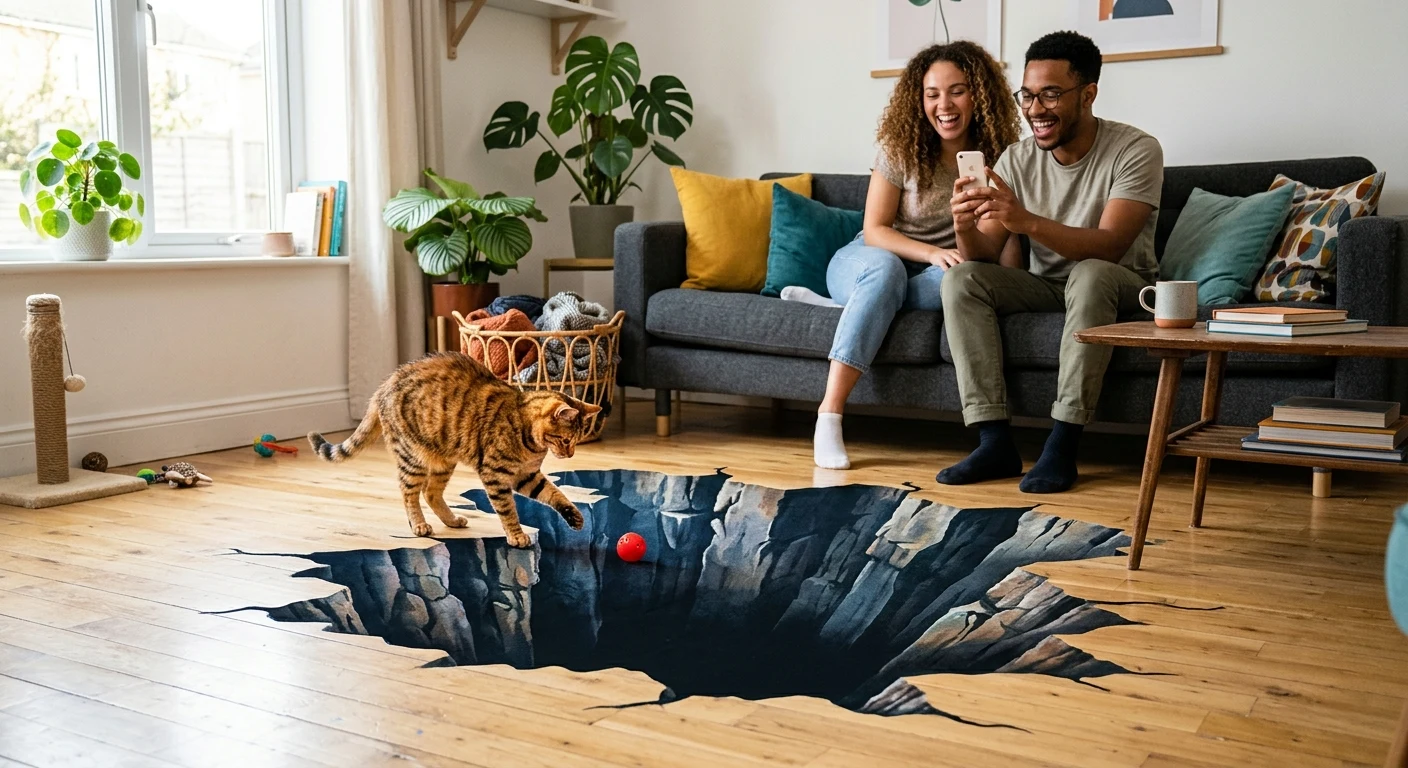
Recently, a "3D Abyss/Cliff Illusion Pet Mat" has taken short-video platforms by storm. The premise is simple yet captivating: when pets approach the mat, the realistic optical illusion makes them perceive a sudden drop. Their hesitant paws, confused stares, and dramatic "zoomies" have sparked a global "challenge" trend, with related hashtags garnering tens of millions of views.
For cross-border sellers, this isn’t just a viral moment—it’s a massive opportunity to tap into the high-growth custom home decor and pet economy markets.
Why 3D Illusion Products Go Viral
The success of these products is rooted in a deep understanding of modern social media algorithms and consumer psychology:
- The Pet Economy Factor: Pet ownership in Western markets is at an all-time high (70% in the US; 50 billion EUR market in Europe). Gen Z, the primary drivers of this trend, treat pets as family and are eager to buy interactive items that create "shareable moments."
- Scroll-Stopping Contrast: Traditional rugs are functional but "boring." 3D illusions use perspective to turn a flat surface into a "black hole" or a "mountain peak." This "see it to believe it" visual hook is perfect for fast-paced content feeds, stopping users mid-scroll.
- Low Friction, High Reward: The product is a low-cost lifestyle upgrade that requires zero technical skill from the user to film a "viral" video.
Core Selling Points for Sellers
To replicate this success across other categories, focus on these three pillars:
- Illusion meets Daily Life: Transform flat objects into "3D scenarios" (canyons, waterfalls, geometric voids) for living rooms, hallways, or bathrooms.
- Interactive Emotional Triggers: The product should evoke a reaction—curiosity, laughter, or surprise—from humans or pets alike.
- Lightweight & Shareable: Choose items that are easy to ship and "plug-and-play" for content creation.
Winning Product Recommendations
- 3D Wall Decals & Art: "Window-view" landscapes or "cracked wall" effects. These are perfect for budget-friendly room makeovers and home office backgrounds.
- 3D Novelty Tableware: "Trap-door" placemats or "lava" coasters. These create fun dining experiences and are highly giftable.
- 3D Interactive Pet Zones: Interactive mats that simulate outdoor environments (grass, ponds, or cliffs) for indoor pets to explore.
- 3D Safety/Bath Mats: "Shark tank" or "deep ocean" bathroom mats. These blend utility with a "prank" element, making them highly viral in the home goods niche.
Operational Tips for Sellers
- Supply Chain: Adopt a Flexible Manufacturing (Print-on-Demand) model. Test multiple designs in small batches to see which patterns gain traction before committing to bulk inventory. Ensure high-definition printing to maintain the 3D effect.
- Logistics: For rugs and mats, use "roll-packing" with sturdy tubes to prevent creases that ruin the optical illusion. For customized orders, maintain a clear 7–10 day production window to manage customer expectations.
- Brand Reputation: 3D products rely heavily on visual accuracy. If the print is blurry, the illusion fails. Ensure strict quality control and a responsive refund policy to maintain high ratings on social commerce platforms.