




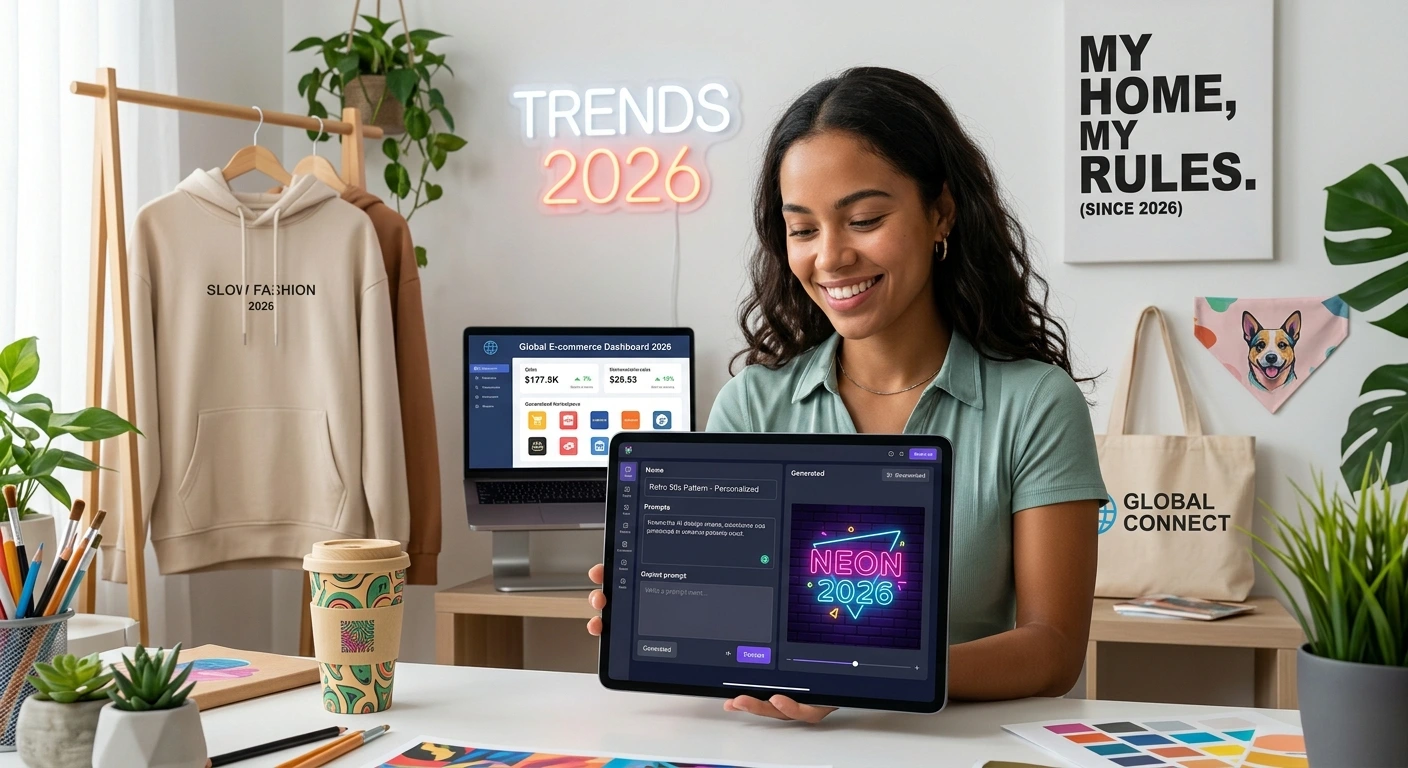
To thrive in the Print-on-Demand (POD) business in 2026, staying ahead of industry trends is not just important—it’s critical.
The landscape is shifting rapidly. Consumer preferences evolve at breakneck speed, and technology is constantly advancing. To maximize profits and create true bestsellers, you must grasp the new forces shaping the market.
- The Bigger Picture: A Market in Full Surge Online shopping continues to explode, and the POD industry is riding this massive wave. The global POD market is projected to skyrocket to a staggering $57.9 billion by 2033, driven by a compound annual growth rate (CAGR) of 23.3%. For context, the market size was estimated at $10.78 billion in 2025. This sector is not just growing; it's accelerating with zero signs of slowing down.
- The Top Sellers' Secret: Data reveals a significant performance gap. While an average seller might take 165 days to secure their first $1,000 in sales, top-performing sellers hit that milestone within just 100 days. The difference often boils down to one crucial skill: anticipating and leveraging trends.
Here is your comprehensive breakdown of the essential POD trends to dominate in 2026, across operations, design, and product selection.
New Operations Strategies for 2026
1. AI & Automation Integration
The cornerstone of modern POD success is the deep integration of AI and automation. These tools are transforming the backend, streamlining printing workflows, and eliminating tedious, repetitive tasks. Systems can now automatically handle file review, color correction, and layout optimization, freeing you to focus on growth.
2. Hyper-Personalization at Scale
Modern printing technology now makes true "one-of-a-kind" personalization scalable. Advanced systems can generate thousands of unique, tailored products from a single design framework, enabling regional customization, audience-specific variants, and individual preference matching.
3. Strategic Multi-Channel Selling
Relying on a single sales channel is risky. Diversifying across multiple global e-commerce platforms and popular social marketplaces is essential. This approach allows you to reach customers on their preferred platforms, increases interaction points, and leverages the unique marketing tools inherent to different channels.
4. Augmented Reality (AR) Tools
AR is revolutionizing customer experience in POD. For products like wall art or home decor, AR integration allows customers to "try before they buy" via their smartphones, visualizing the product in their actual space. This significantly boosts buyer confidence and reduces return rates.
5. Smart Product Line Expansion
Expanding your offerings is about providing more value to existing customers. Once a buyer trusts your brand and has purchased one item, they are much more likely to try related products from you. The goal is to maximize customer lifetime value and increase repeat purchase rates.
Key POD Design Directions for 2026
Design trends are dynamic. To stay relevant, you must align your visuals with current styles. Here are the five critical design directions for 2026:
1. Extreme Customization
This trend focuses on offering the highest level of personalization, where every design feels "exclusive to me." In a crowded market, customers crave unique items and are willing to pay a premium for products that reflect their individuality.
2. Minimalist Typography
Simple, impactful text is a powerful visual strategy. Think bold, clean sans-serif fonts and ample white space that cut through the noise. This style translates exceptionally well to POD products, looking stunning in mockups and adapting cleanly to a vast range of different materials.
3. Premium Finishes & Craftsmanship
As the POD market matures, customers are seeking higher-end options. Think beyond standard prints to techniques that add perceived value: textured embroidery, foil stamping, metallic accents, and higher-quality fabric choices. These finishes support premium pricing and elevate brand perception.
4. '90s Retro Aesthetic
The nostalgic, vibrant spirit of the 1990s is back. Embrace bold, energetic color palettes (e.g., neon purple paired with lime green), chunky graphic lines, pixelated edges, and bold, "loud" typography. The aesthetic is wonderfully raw, playful, and anti-minimalist.
5. AI-Generated Designs
AI is no longer just for operations; it’s a design powerhouse. Even those with zero formal design training can now create complex, professional-grade patterns and graphics in minutes using advanced AI generators. This technology enables rapid trend-chasing, extensive customization, and the creation of unique art at incredible scale.
2026’s Winning POD Product Categories
Direct your product selection toward these hot market segments:
1. Apparel: Focus on Comfort and Niche Commmunities
Apparel remains the foundation of POD. The prevailing 2026 style is loose, relaxed fits and ultra-comfortable fabrics. Success lies in targeting specific niche communities: hobbyists (camping, cycling, journaling), professions (programmers, nurses, teachers), and, of course, passionate pet owners.
2. Accessories: Small Items, Big Impact
Accessories are seeing a sales surge. Products like tote bags, hats, custom socks, and statement pins are perfect for customers looking to express themselves subtly. These items offer a great entry point for new customers and serve as free mobile marketing for your brand.
3. Home Decor: Personalized Sanctuaries
The desire to create unique, comfortable living spaces drives demand for personalized home products. Focus on canvas prints, decorative pillows, customized blankets, and tapestries featuring family names, specific quotes, or intricate, trending artwork.
4. Pet Products: The Booming Pet Economy
Pet owners spare no expense on their companions. Customized products like pet bandanas featuring the pet’s stylized photo, personalized pet beds, and custom apparel are highly emotional purchases that deepen the bond between owner and pet, boasting very high repeat purchase rates.
5. Stickers: Low Cost, High-Velocity Branding
Stickers are an evergreen POD favorite, offering low production costs and versatile applications. Successful sellers create curated, themed sticker packs to encourage multiple purchases, boost average order value, and enhance brand visibility.
6. Drinkware: Sustainability and Specific Use Cases
Focus on eco-friendly, durable, and reusable drinkware (insulated tumblers, coffee mugs). Target specific lifestyle niches rather than generic products: think specialized mugs for nurses, motivational bottles for teachers, or portable gear for camping enthusiasts.
7. Tech Accessories: Durability and Custom Design
Electronic accessories are essential. Focus on producing high-quality, protective phone cases and durable sleeves for tech gear. As long as you combine reliable protection with highly customizable, trending designs, this category will remain a consistent bestseller.
How to Stay Ahead of the Curve and Maintain Your Edge
To continuously outperform your competitors, you must prioritize consistent learning and strategic agility. Incorporate these practices:
- Trend Monitoring: Actively track design, fashion, and cultural trends on major e-commerce and creative platforms to see what themes and products are gaining traction.
- Agile Testing: Use small-batch production to quickly validate new designs or product types. This limits risk and allows you to test market reception before scaling up.
- Data-Driven Decisions: Focus your resources on what is actually working. Identify your best-performing designs and product categories and double down on those proven winners.
- Multi-Platform Strategy: Establish a presence on various major global e-commerce and specialized marketplaces to diversify risk and capture diverse customer bases.
- Identify Your Niche: Deepen your focus on a specific market segment. Understand your target customer intricately and only adopt trends that authentically align with your brand identity and voice.
By anticipating these shifts and integrating them into your strategy, you ensure your Print-on-Demand business will not just compete but lead the market in 2026.