




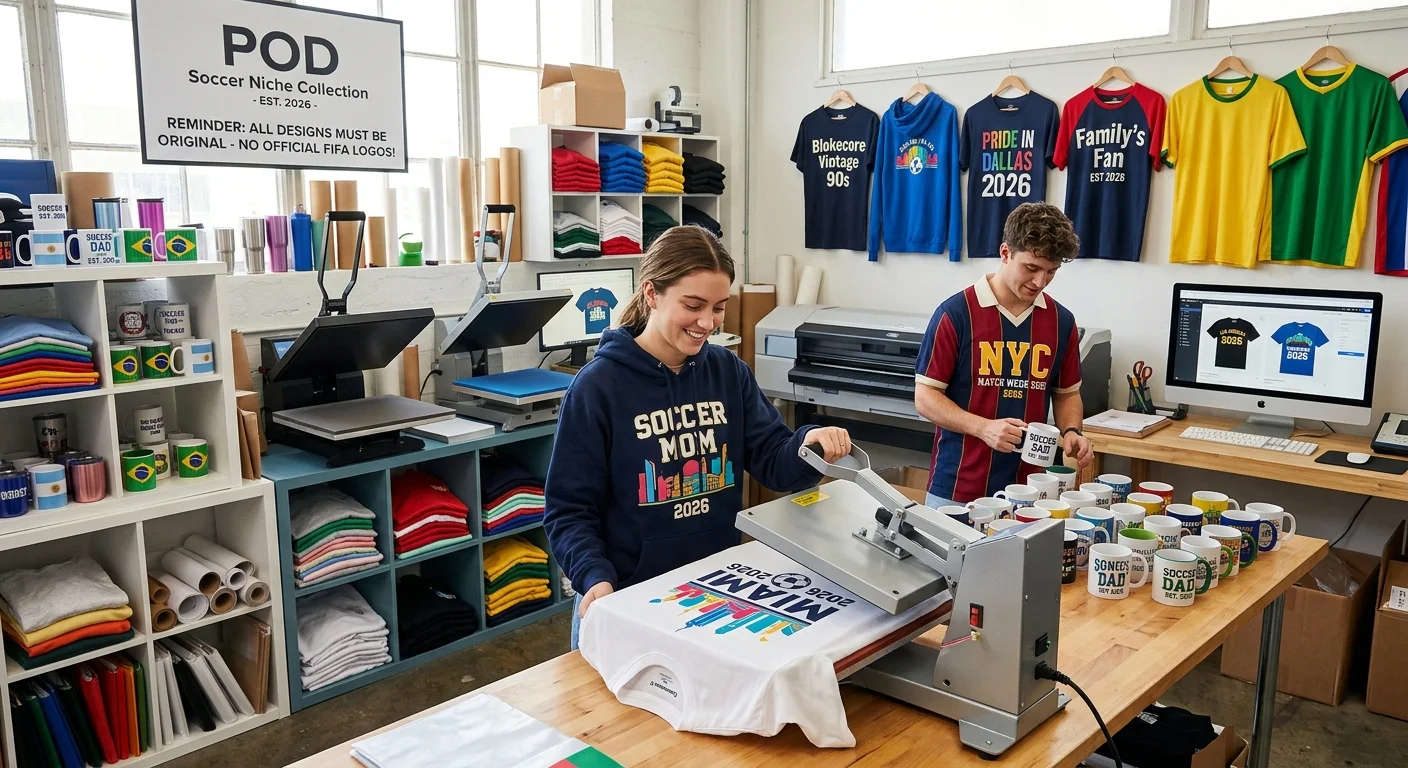
The 2026 joint-hosted soccer tournament in North America (USA, Canada, and Mexico) isn't just a sporting event; it’s a historic traffic windfall for cross-border sellers—especially those in the Print-on-Demand (POD) space.
Why is 2026 the biggest opportunity yet?
- Unprecedented Scale: 16 host cities covering the world's largest e-commerce market—the United States.
- Massive Market Cap: The global soccer merchandise market is projected to hit $29 billion by 2034. In the US alone, licensed sports merchandise already exceeds $15 billion.
- Economic Impact: The 2026 event is expected to generate a $30 billion economic boost in the US.
- The Personalization Trend: Crucially, nearly 40% of online shoppers now prefer "personalized" gear over standard replica jerseys.
- For POD sellers, this means "zero inventory risk + high customization" provides a structural advantage over traditional retail. However, high rewards come with high risks. Strict Intellectual Property (IP) enforcement is the norm. To win in 2026, compliance is your foundation for profit.
PART 01: The IP Red Line – Navigating Compliance
Legal teams for major sporting organizations don’t just target direct counterfeits; they actively shut down "implied associations." To keep your store safe, avoid these specific triggers:
Absolute "No-Go" Zones (Do Not Use)
- Official Trademarks: Strictly avoid registered names of the tournament, the year/location combo (e.g., "World Cup 2026"), or official slogans.
- Official Visuals: Never use the official event crest, host city logos, national football association badges, the trophy silhouette, or the official mascot.
- Player Rights: Avoid player names, jersey numbers in combination with names, or any lifelike illustrations/photos of athletes.
The Trap of "Implied Association"
This is the most common reason for account suspension. Even if you don't use a trademarked logo, using phrases like "Official 2026 Gear" or "The Summer’s Biggest Soccer Event" suggests a partnership that doesn't exist. Your designs must sell based on originality and artistic value, not by misleading customers into thinking it’s official merchandise.
PART 02: POD Product Strategy – Demand vs. Risk
Based on historical data, these categories show the strongest demand signals for 2026:
| Product Category | Logic & Selling Points | Demand Index |
| T-Shirts | The core traffic driver. Covers home-viewing and stadium crowds. High search volume. | Extreme |
| Mugs | Essential for match-day rituals. Strong gift appeal when combined with national colors. | Extreme |
| Tumblers/Drinkware | Social and outdoor appeal. Custom names and team colors perform exceptionally well in community groups. | High |
| Hoodies/Sweatshirts | A "lifestyle" staple for the cooler months of the season. Higher margins and repeat purchase rates. | High |
| Posters/Wall Art | Host city skylines and commemorative decor for fan caves. High sentimental value. | Medium-High |
| Baby Onesies | "My First Global Tournament" is a powerful emotional niche for new parents. Lower competition. | Rising |
PART 03: 7 High-Conversion Design Directions (Zero IP Risk)
Creative execution is your edge. Here are seven safe, market-proven directions for your 2026 collection:
1. National Pride + Original Badges
- The Play: Use the iconic color palettes of participating nations (e.g., Sky Blue/White for Argentina, Black/Red/Gold for Germany) but create your own unique shield or crest.
- Why it works: You bypass official association logos while still tapping into the fan’s desire to represent their country. Use country names and colors freely—they are non-copyrightable.
2. "Blokecore" Retro Aesthetics
- The Play: Embrace the 90s vintage jersey trend. Think distressed fonts, geometric patterns, "washed" textures, and retro typography.
- Why it works: This is a major fashion trend. It looks stylish and premium without needing any official branding. It sells a "vibe" rather than a specific event.
3. Host City Art
- The Play: Blend city skylines with soccer elements. Examples: "Miami Skyline + Soccer Ball," "LA Soccer 2026," "NYC Match Week."
- Why it works: Host cities like Miami, LA, and New York have massive local fanbases. Long-tail keywords for specific cities have lower competition and higher conversion rates.
4. Fan Personas & Identity
- The Play: Text-heavy designs targeting specific roles. "Soccer Dad EST. 2026," "Proud Soccer Mom," or "The Family's Biggest Fan."
- Why it works: This taps into the gift market. People love buying "identity" gear for family members, and these designs often go viral on social media.
5. Match-Day Matchups
- The Play: Create designs based on specific game pairings, such as "Netherlands vs. Japan" or "Argentina vs. Brazil."
- Why it works: This is purely descriptive and carries zero trademark risk. Launching these shortly before a match captures "reactive" search traffic from fans looking for specific souvenirs.
6. Original Mascots & Characters
- The Play: Instead of using the official mascot, create your own "Fan Animal" — like a bald eagle in a jersey or a lion wearing a fan scarf.
- Why it works: This allows you to build your own brand IP. If your character becomes popular, you can reuse it for future tournaments, creating long-term brand equity.
7. User-Customizable Templates
- The Play: Offer templates where buyers can input their own name, lucky number, and choose their team colors.
- Why it works: Customization increases emotional investment. One template can serve fans of any country, drastically reducing your design workload while increasing conversion.