




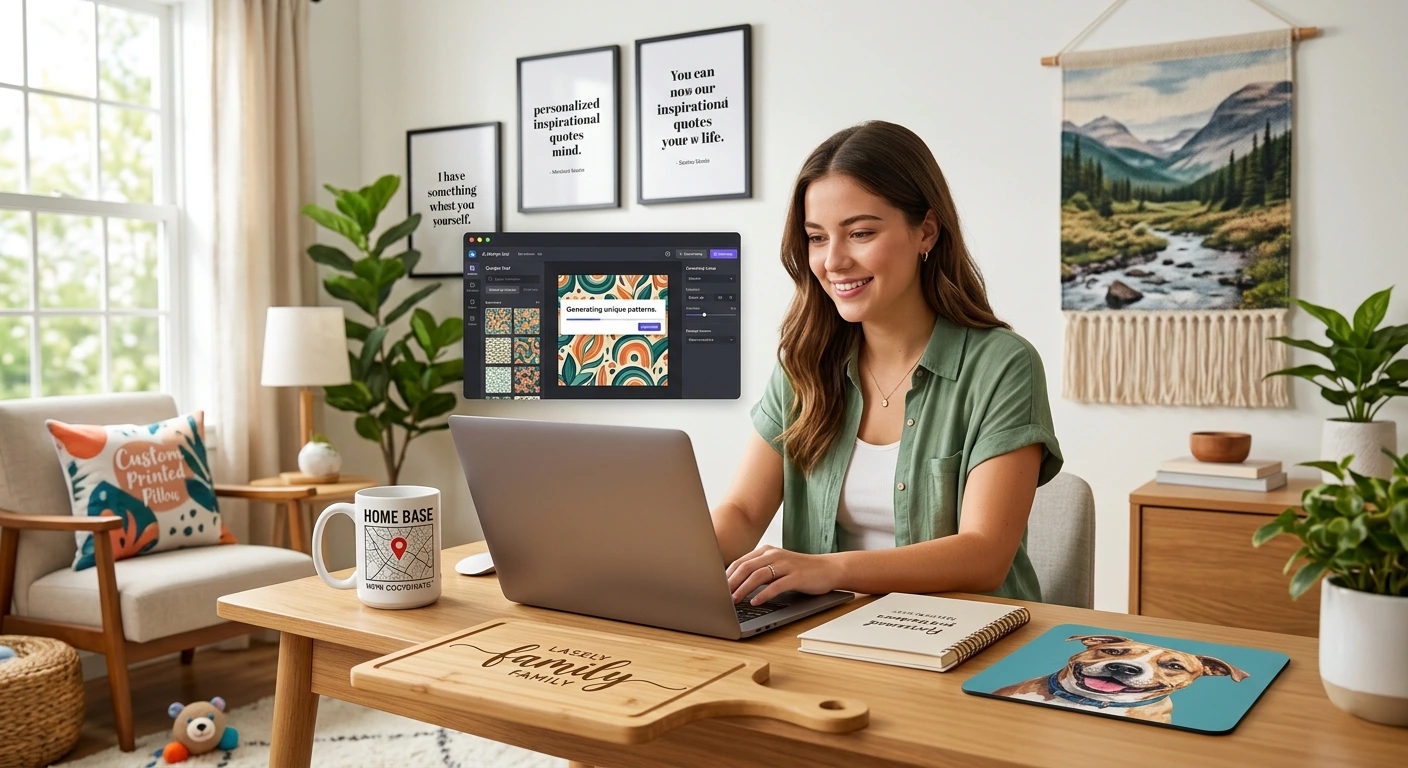
Anyone in cross-border e-commerce knows the reality: the environment is intensely competitive. Traffic costs are rising, inventory can be crippling, and price wars are a constant battle.
But what if there were a business model where you don't hold inventory, don't worry about overstock, and can sell a simple item like a mug for a 3x premium?
This is Print-on-Demand (POD).
Today, we're diving deep into the defining POD trends for 2026. This isn't just about what designs are popular; it's the core code for how you will select products, find blue-ocean opportunities, and generate high-profit margins over the next two years.
Why is POD the Future "Money Printing Machine"?
Let's look at the data:
By 2026, the global POD market size is projected to reach a stunning $13 billion, with an annual growth rate exceeding 20%!
Why is it so hot? Because consumer behavior has shifted.
Today's consumers, particularly Gen Z and Millennials, aren't lacking "stuff." What they crave is self-expression.
82% of global consumers say they want items specifically customized for them.
By 2025, it's estimated that 1 in every 5 orders will involve some form of customization.
What does this mean for you?
It means that "standardized products" are losing favor, while "personalized customization" is the key to unlocking traffic.
Those who can seize this opportunity early will be able to achieve exceptionally high conversion rates with minimal advertising costs on major e-commerce platforms and social marketplaces.
4 Can't-Miss POD Trends for 2026 (with Product Selection Insights)
If you're still just printing a simple English word on a T-shirt, you're missing out. In 2026, these four directions are where the true high-profit opportunities lie.
Trend 1: Customization is "Storytelling," Not Just a Name.
Previously, customization meant adding "Happy Birthday." Today, that's the bare minimum. Buyers want emotional resonance; they want unique memories.
- Personalized Photo Gifts: Go beyond just faces. Think about printing a pet's funny picture, a couple's first trip photo, or a cherished family portrait. These are perfect for occasions like Mother’s Day and Valentine’s Day.
- Story-Driven Products: For example, a mug that says, "That afternoon we met at the coffee shop" + a hand-drawn map illustration. You're not selling a mug; you're selling a memory.
- Custom Map Coordinates: "Our love, 1314 km apart" or "The coordinates of my hometown." Products with a strong sense of belonging enjoy very high repeat purchase rates.
- Personalized Home Decor Aesthetics: The "Aesthetic Room" trend is massive on social media. Buyers love making minimalist wall art, throw blankets, and area rugs featuring their names or mantras. Remember: it must be visually appealing and "shareable" on visual social platforms.
Trend 2: AI-Generated Designs will Maximize Your Efficiency.
Are you still spending hundreds on designers or spending hours editing images yourself? By 2026, POD sellers who don't embrace AI will be left behind. These tools are now incredibly powerful.
- Surrealism, Cyberpunk, Minimalist Textures: Designs that were once difficult to create can now be generated by AI in seconds.
- Rapid Market Testing: Use AI to generate 100 design variations in a single day. Upload them instantly to test click-through rates. Produce only what gets traction, with virtually zero design cost!
Trend 3: Sustainability is a Premium Justification, Not a Slogan.
Global consumers have a deep and growing commitment to sustainability. It's no longer just a trend; it's an expectation that can justify a premium price.
- Organic Cotton Apparel: Items labeled with organic materials can command a 20% price premium.
- Biodegradable Packaging: Ditch the plastic bags for recycled kraft paper or biodegradable mailers.
- Eco-friendly Home Goods: Think laser-engraved bamboo cutting boards or wooden wall art. Pair these with a strong sustainability message, and they become new bestsellers in the home goods category.
Trend 4: Pivot from Apparel Saturation and Claim the "Non-Apparel" Cake.
Competition in the T-shirt and hoodie space is cutthroat. The fastest growth in 2026 will be in niche non-apparel "blue oceans":
- Kitchen & Dining Accessories: Personalized insulated tumblers, custom cutting boards, and unique coffee coasters (a perennial bestseller!).
- Holiday & Seasonal Decor: Custom Christmas ornaments, themed banners, and unique holiday centerpieces.
- Office & Home Essentials: Personalized mouse pads, custom notebooks, and even unique pet accessories and toys!
- The logic is simple: these items often have higher average order values, lower shipping costs relative to price, and are less prone to saturation, leading to thicker profit margins.
Final Recommendations for Cross-Border Sellers
Trends are like a powerful wind; with it, anyone can soar, but only those with wings will go the distance.
- Niche Down: Don't just make "fitness T-shirts". Create "customized tank tops for Pilates enthusiasts". The smaller the niche, the lower the competition, and the stronger the customer loyalty.
- Prioritize Visual Storytelling: Your main image must not only show the product but also the context of use. If you're selling a personalized blanket, show a family cozily watching a movie together.
- Speed is Critical (Agile POD): See a new cultural meme or trend on social media? Use AI to instantly create a design and have it listed within hours.
In 2026, the Print-on-Demand industry is a gold mine. Whether you're looking for a profitable side hustle or to build a full-scale brand, now is the ultimate time to enter the game!